Invited Speakers
We introduce domestic and international researchers who have been invited to seminars and workshops hosted by the Kawano Laboratory. Through interactions with leading researchers from various fields, we incorporate cutting-edge knowledge into our research.
List of Speakers
| Date | Speaker | Affiliation |
|---|---|---|
| April 3, 2025 | Prof. Daniel Packwood | Kyoto University iCeMS |
| March 31, 2025 | Prof. Takafumi Ueno | School of Life Science and Technology, Science Tokyo |
| June 24, 2024 | Prof. Brent Nanennga | Arizona State University |
2025
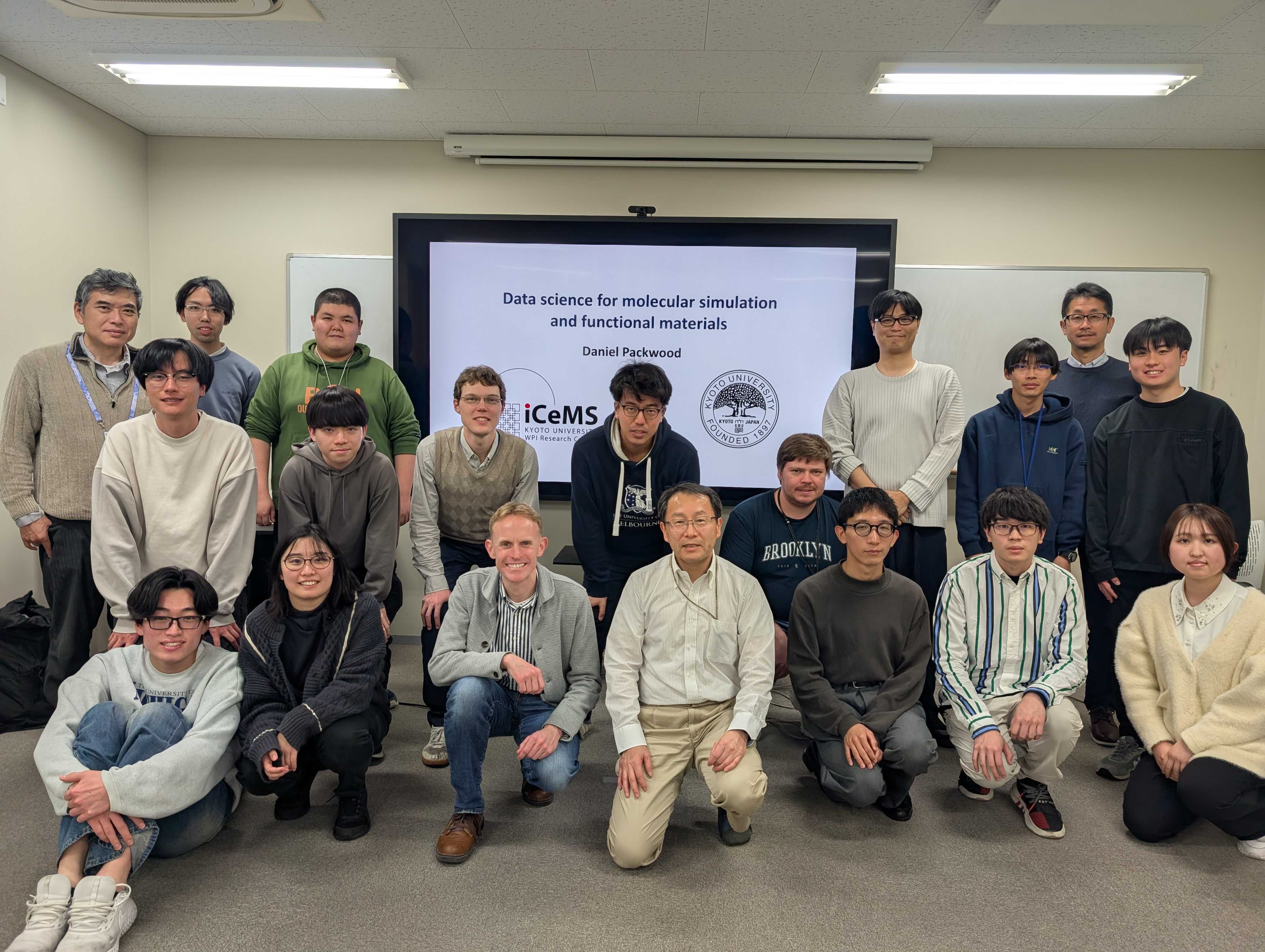
Data Science for molecular simulation and functional materials
Speaker: Prof. Daniel Packwood
Affiliation: Kyoto University iCeMS
Date: April 3, 2025, 14:30-15:30
Venue: Institute of Science Tokyo, Ookayama Campus, EEI Building, Room 611
The lecture covered the latest approaches to applying data science to molecular simulation and functional materials research. Prof. Packwood presented a wide range of topics from protein docking screening methods, computational models for molecular aggregation on surfaces, MOF-based sensing, and new approaches combining quantum chemical calculations with data science for conductivity calculations. The presentation demonstrated the potential that the fusion of theory and data science brings to materials science.
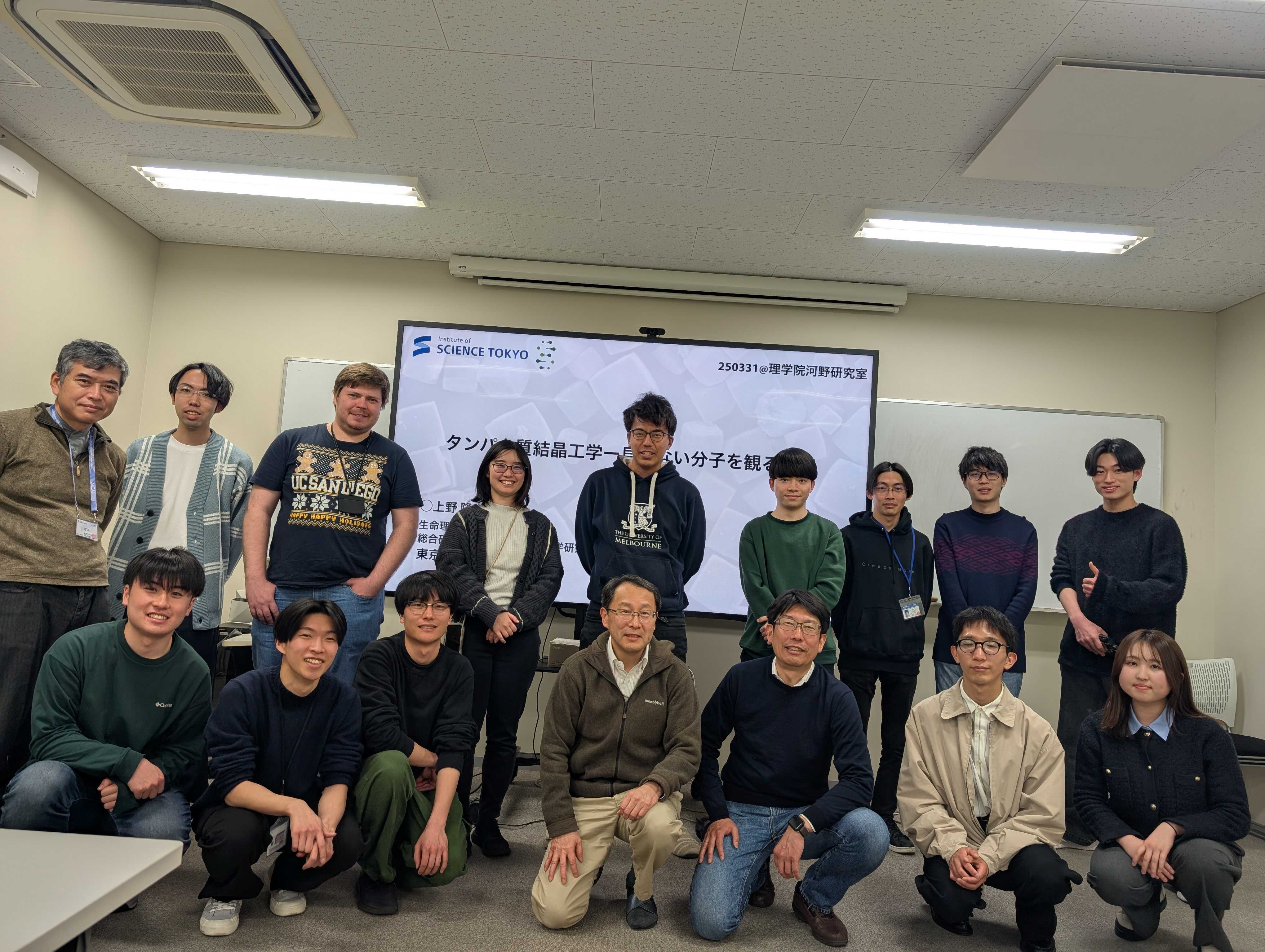
Protein Engineering - Observing Invisible Molecules
Speaker: Prof. Takafumi Ueno
Affiliation: School of Life Science and Technology, Institute of Science Tokyo
Date: February 5, 2025, 16:00-17:30
Venue: Institute of Science Tokyo, Ookayama Campus, EEI Building, Room 611
This lecture presented the frontiers of protein crystallography. Prof. Ueno explained methods for direct observation of chemical reactions using protein crystals and efficient crystallization techniques for novel proteins that have been challenging to crystallize. Furthermore, innovative crystallization approaches for intrinsically disordered proteins (IDPs), which are typically difficult to crystallize due to their lack of stable tertiary structure, were discussed, demonstrating new developments in structural biology.
2024
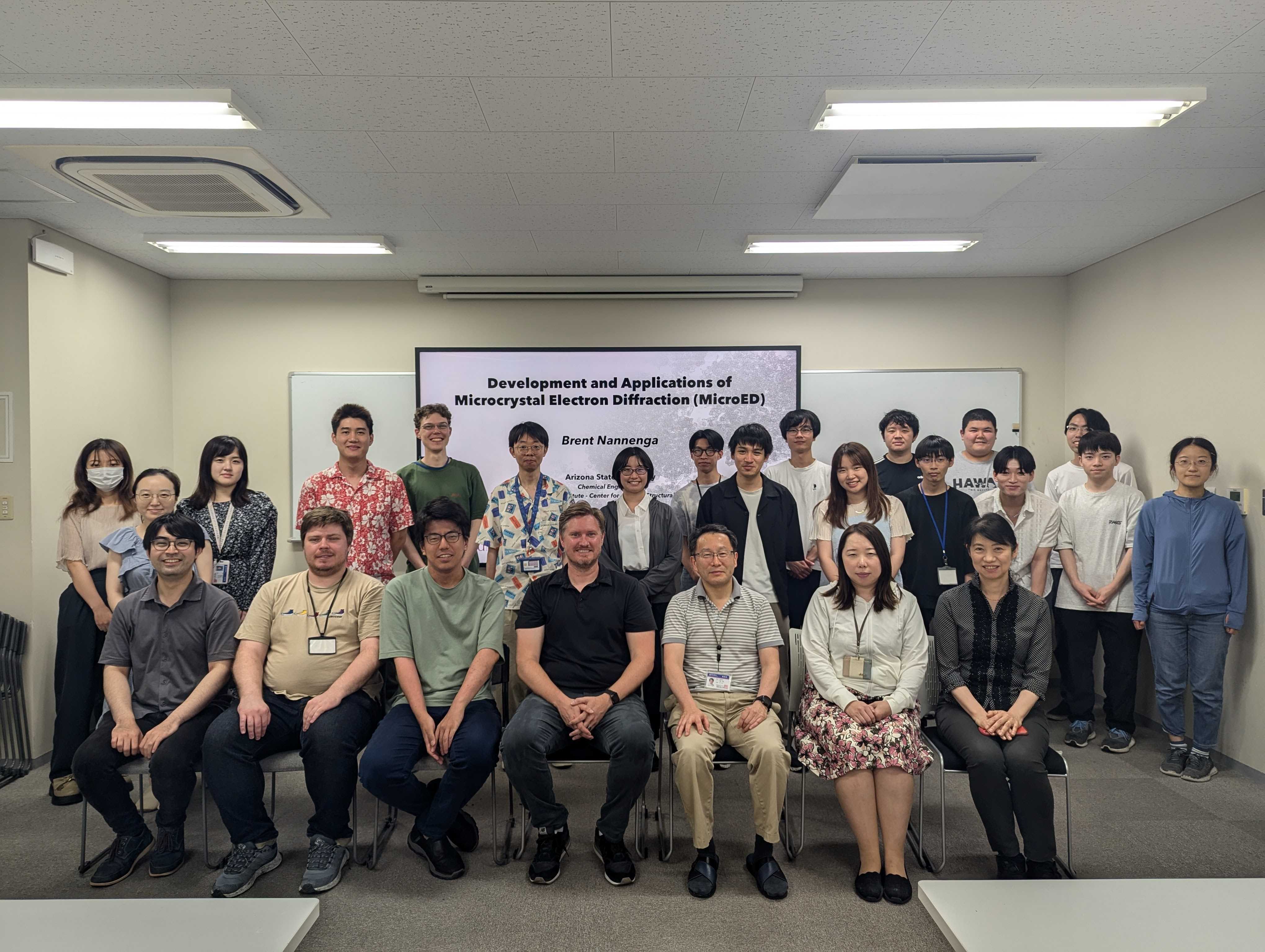
Development and Applications of Microcrystal Electron Diffraction(MicroED)
Speaker: Prof. Brent Nannenga
Affiliation: Arizona State University (USA)
Date: June 24, 2024, 14:00-16:00
Venue: Institute of Science Tokyo, Ookayama Campus, EEI Building, Room 611
This lecture provided a comprehensive overview of the development and applications of Microcrystal Electron Diffraction (MicroED). Starting with the fundamental principles and instrumentation that enable structure determination from extremely small crystals that are challenging for conventional X-ray diffraction methods, Prof. Nannenga systematically explained data collection techniques and processing methods. Particular emphasis was placed on applications to small molecules, with numerous examples from pharmaceutical development and materials science research. This technique, which can obtain high-resolution structural information from crystals just a few nanometers in size, is recognized as a revolutionary technology that opens doors to structural analysis of many substances previously considered impossible to characterize.